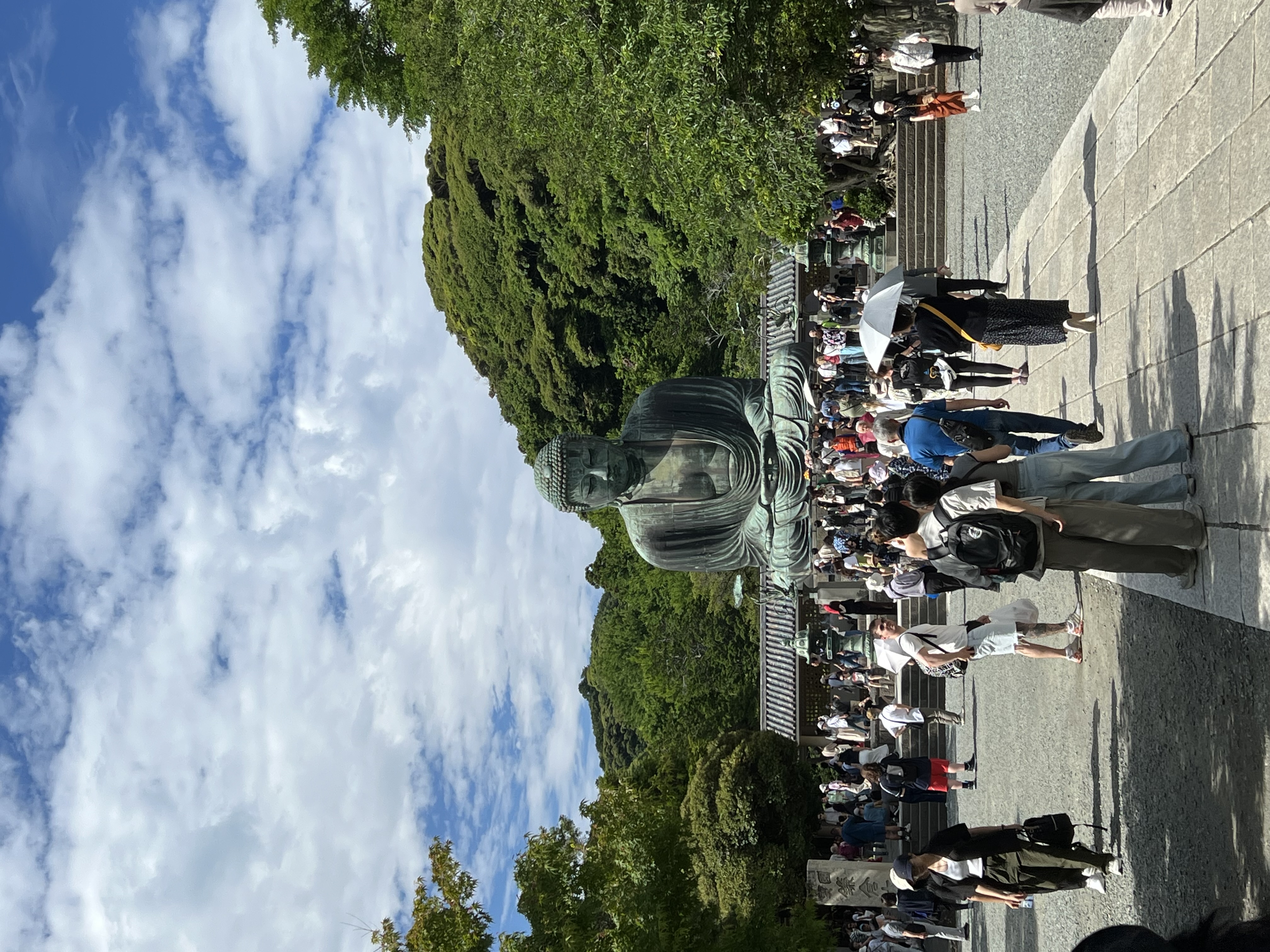
Kamakura is less than an hour from Tokyo and feels like a completely different world. Ancient temples, a giant bronze Buddha sitting open to the sky, a charming old shopping street, and a proper beach. It's one of the best day trips in Japan and somehow still underrated.
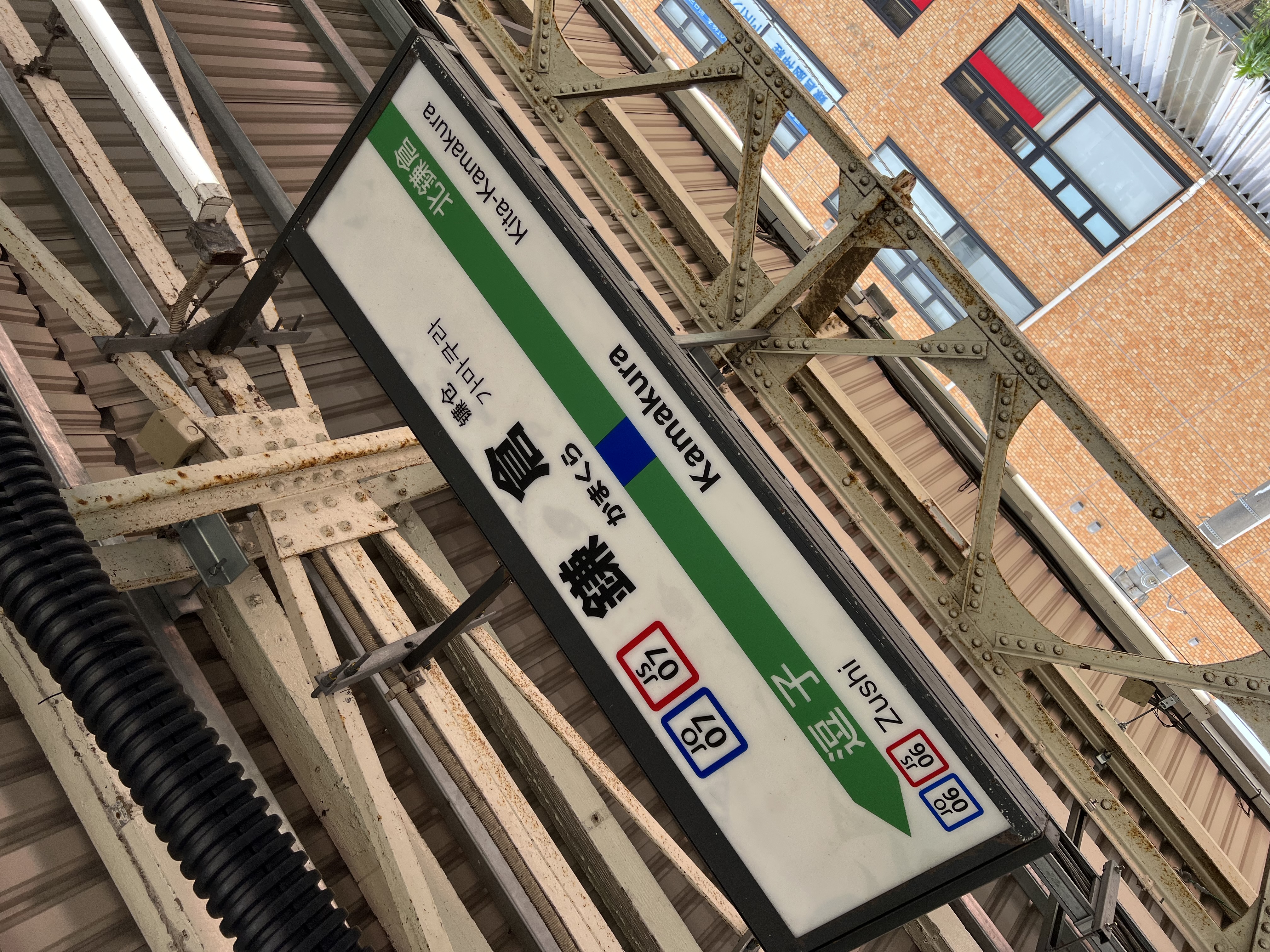
We went on a clear September morning, took the JR Yokosuka line from Tokyo station and were pulling into Kamakura station just under an hour later. The station sign alone is worth a photo — old, weathered, quintessentially Japanese. From there the day essentially organises itself, but there are a few things worth knowing before you go.
Komachi-dori
Step out of the station and Komachi-dori is right in front of you — a covered shopping street that runs straight towards Tsurugaoka Hachimangu shrine. It's lined with small shops selling snacks, souvenirs, ceramics, and local sweets. We spent longer here than planned, which is the correct response. The mitarashi dango skewers are worth stopping for.
The street is lively without being overwhelming. It feels like a place locals actually use rather than a tourist trap dressed up as one. By late morning it gets busy but it never loses the character that makes it worth walking slowly.
The Enoden
To get to the Great Buddha you take the Enoden — the Enoshima Electric Railway — a single-track tram line that runs along the coast between Kamakura and Fujisawa. It's one of those bits of transport that becomes part of the experience rather than just a means of getting somewhere. The purple trains are old, the carriages are narrow, and it passes close enough to the sea that you get glimpses of the coast between buildings.
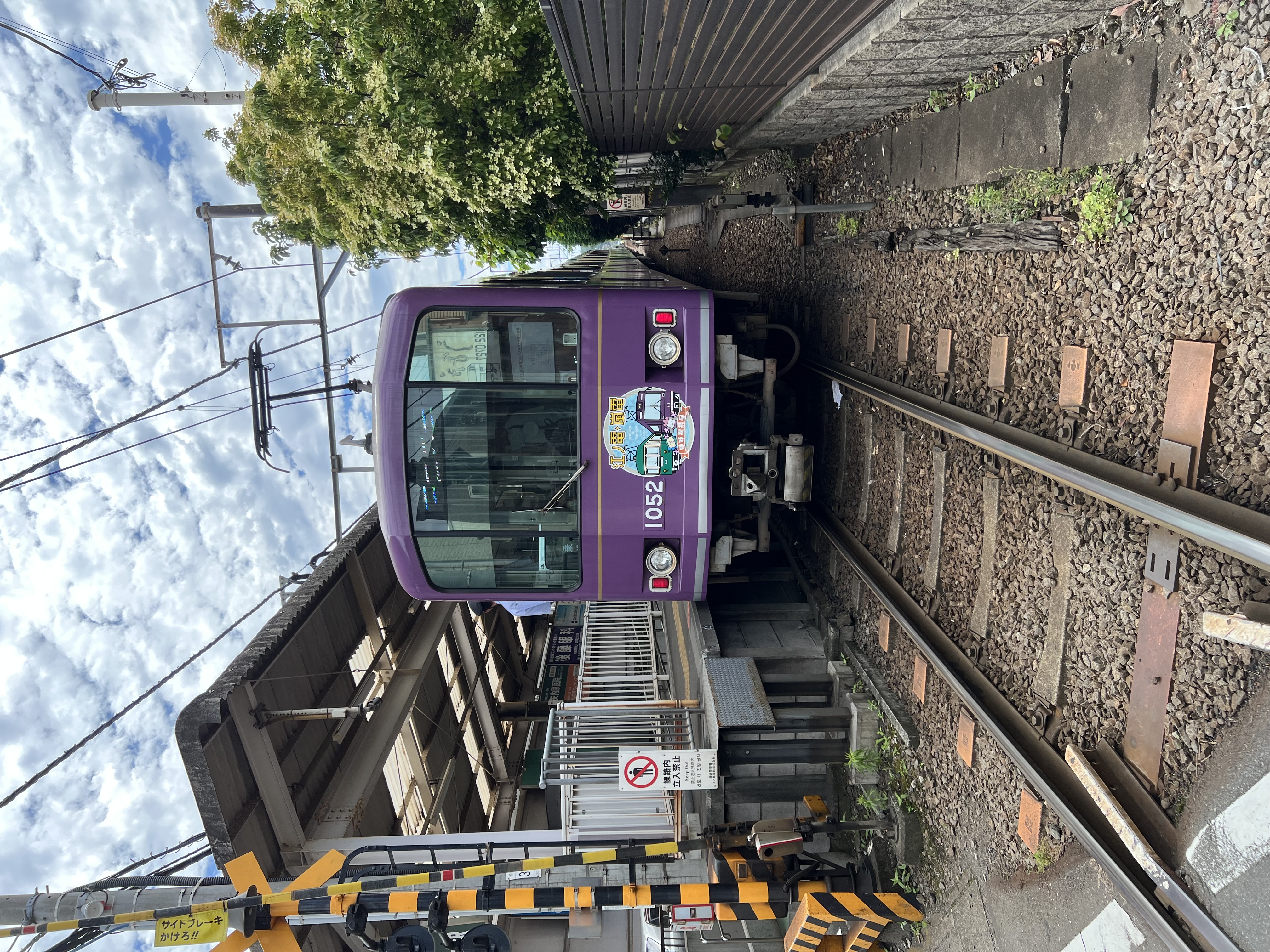
Get on at Kamakura station and ride two stops to Hase. From Hase station it's a ten-minute walk to the Great Buddha through a quiet residential neighbourhood. It's a genuinely pleasant walk — narrow streets, cats on walls, that particular Kamakura calm.
The Great Buddha
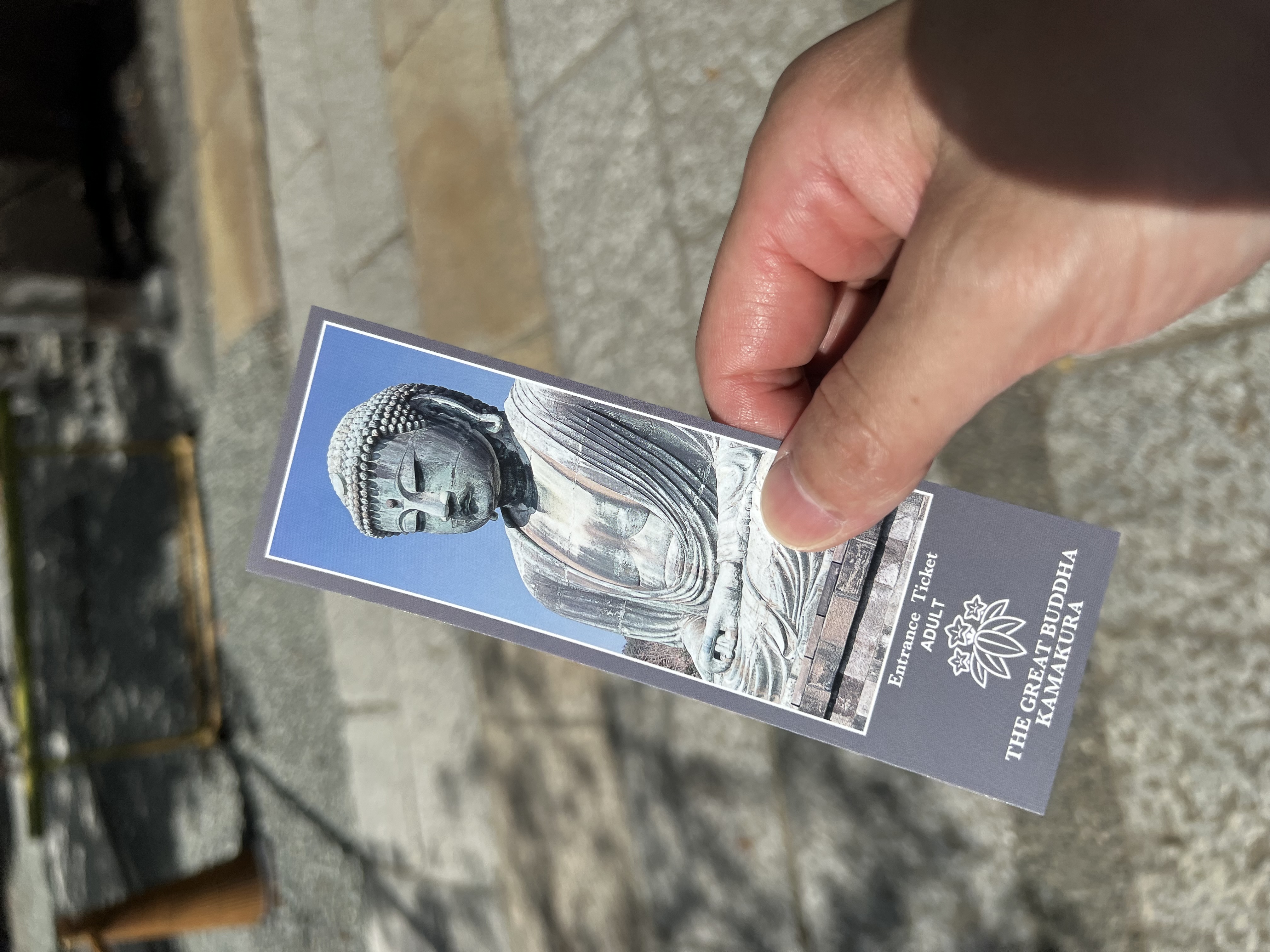
Kotoku-in's Great Buddha is one of those things you think you've already seen because you've seen so many photos of it. Then you're standing in front of it and the scale catches you off guard. It's 13.35 metres tall, cast in bronze, and has been sitting in the open air since the hall that originally housed it was destroyed by a typhoon in the 15th century. It hasn't been inside since.
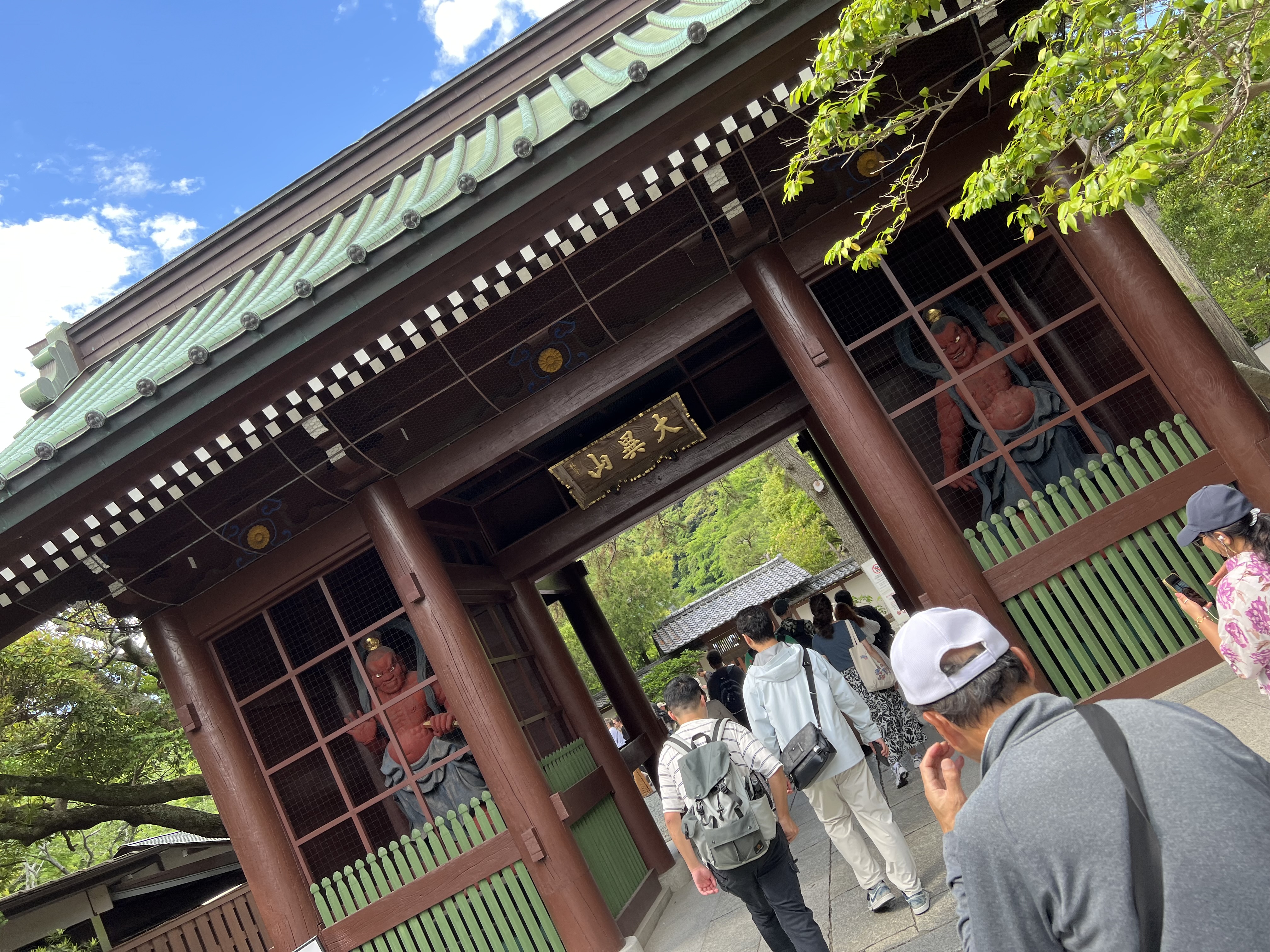
Entrance is ¥300 for adults — one of the cheapest admission fees in Japan for something this significant. You can also pay an extra ¥100 to go inside the statue itself through a small door in the base, which gives you a sense of the hollow bronze construction. It's a bit like standing inside a bell. Definitely do it.
The Beach
After the Buddha, ride the Enoden back towards the coast and get off at Yuigahama or Kamakurakokomae. The beach at Kamakura is long, wide, and faces directly onto Sagami Bay. On a clear day you can see the outline of the Izu Peninsula and occasionally, if the air is clear enough, Mount Fuji to the west.
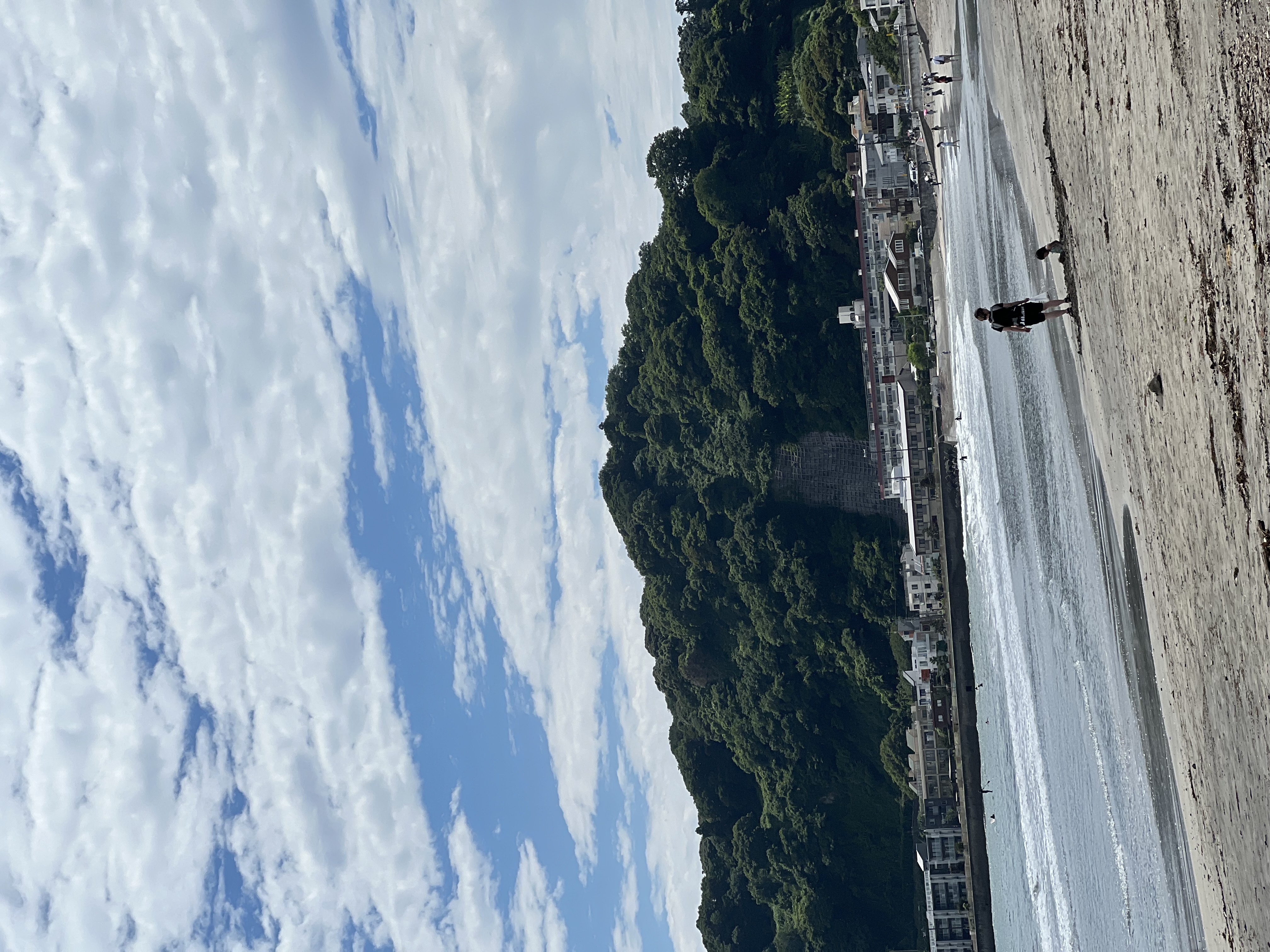
It's a different gear from the temples — looser, more local, people walking dogs and eating things from paper bags. Worth an hour just to sit and decompress before the train back.
Lunch
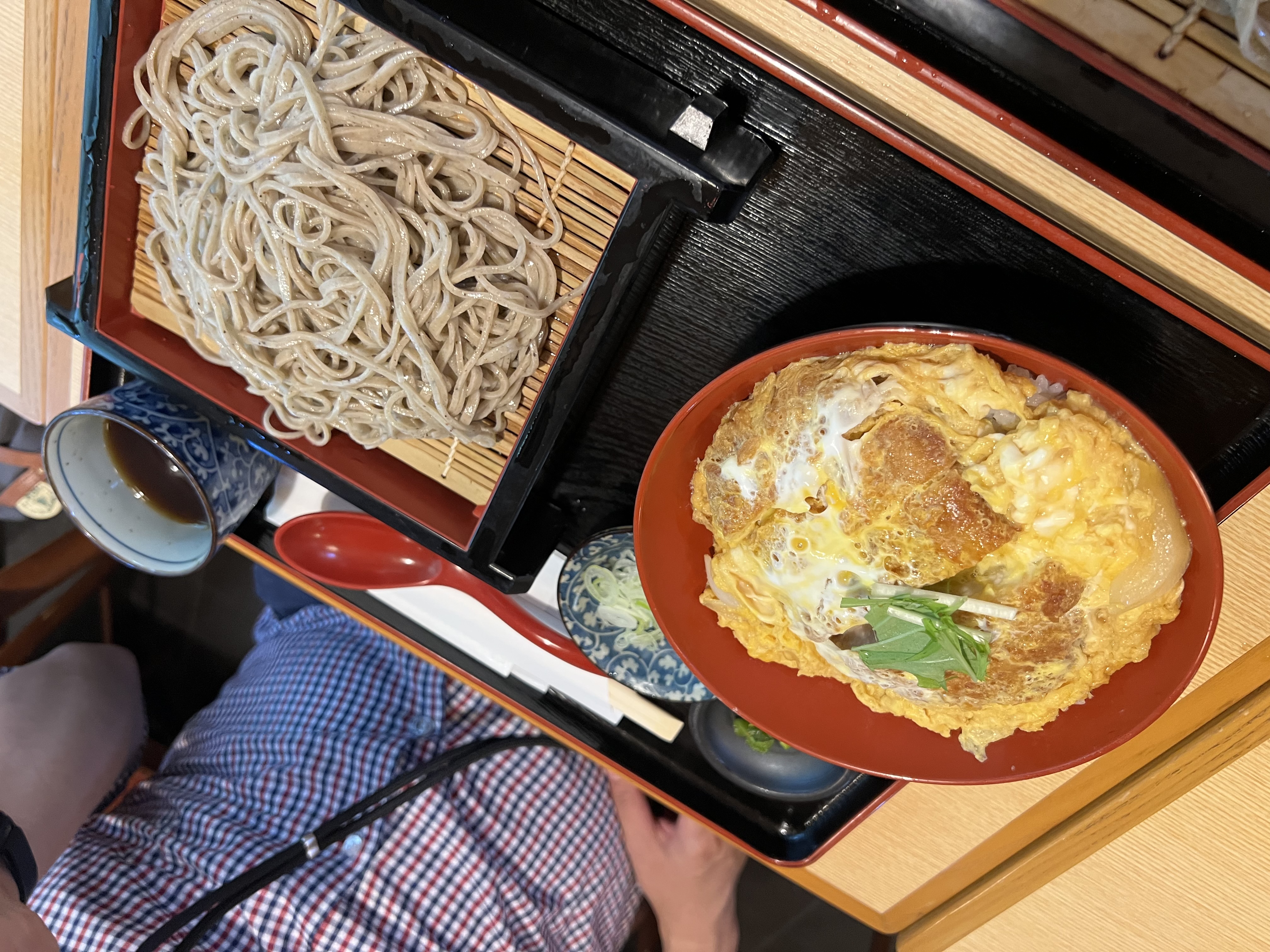
We ate at a small soba place near Hase — the kind of restaurant with a handwritten menu and three things on it. Soba with katsudon. Clear dipping broth, firm noodles, crispy pork cutlet with egg. One of those meals that costs about ¥1,200 and stays with you longer than meals that cost ten times that.
Get the JR Pass or just pay per journey — the train from Tokyo is straightforward and worth doing early. Arrive by 9am, walk Komachi-dori, ride the Enoden, see the Buddha, hit the beach, eat soba. You're back in Tokyo by late afternoon with a full day's worth of Japan in you.