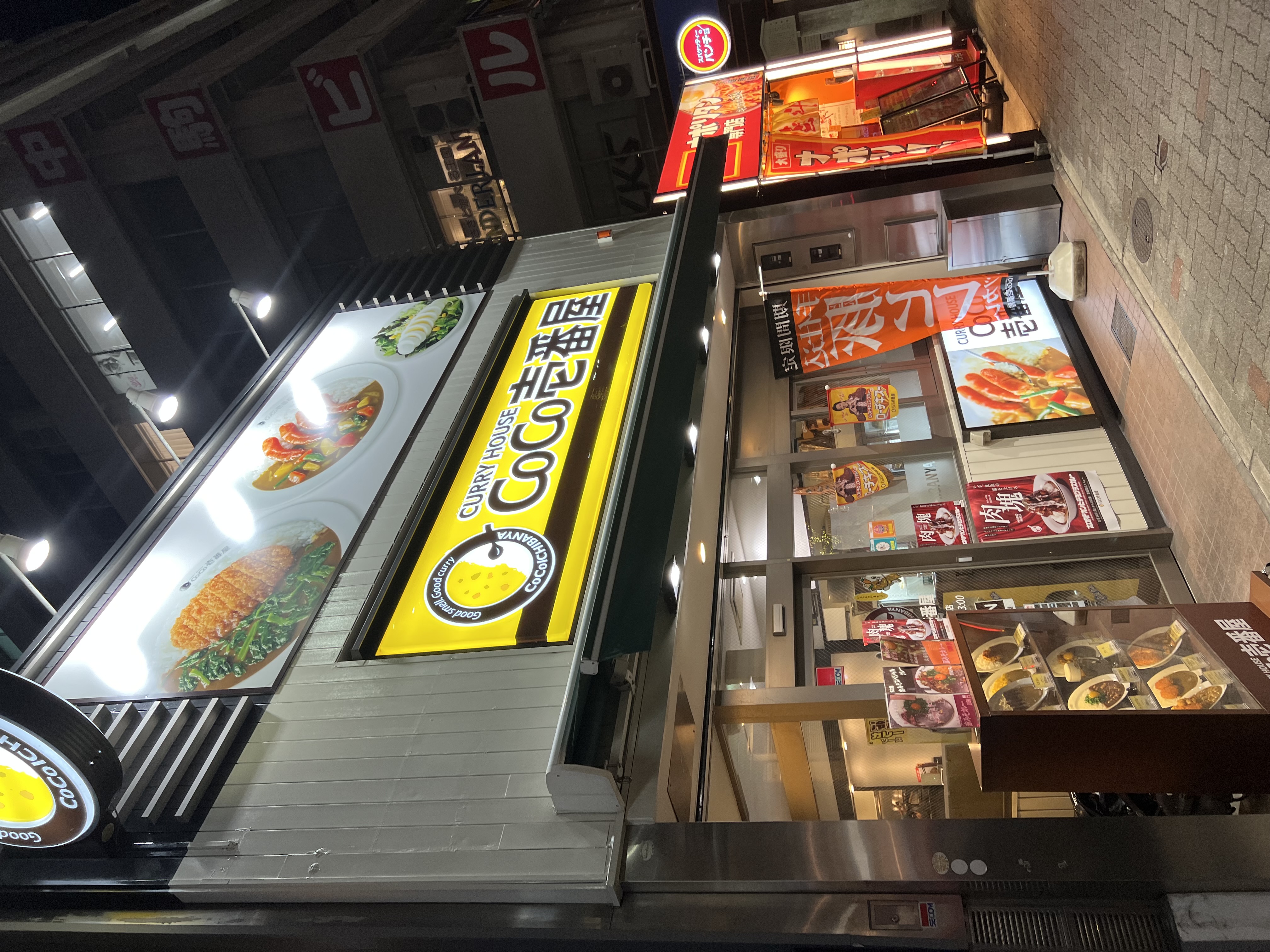
CoCo Ichibanya started in Aichi Prefecture in 1978. We were standing outside one at night in Nagoya, the city most associated with the chain, and it felt only right to go in.
You see CoCo壱番屋 everywhere in Japan. The yellow sign is impossible to miss — it pops up at train stations, in shopping malls, on side streets at midnight when you're hungry and nothing else is open. It's the kind of place you might walk past twenty times on a trip without going in, because there's always a ramen shop or an izakaya or something more exotic competing for your attention.
But Nagoya is different. This is CoCo's home. The chain was founded in Ichinomiya, just west of the city, by a couple who started out selling curry from a tiny coffee shop. It grew into one of the biggest restaurant chains in Japan and eventually went global. Every time you've seen one anywhere in the world, it traces back here. So going on the trip to Nagoya felt less like grabbing a convenient dinner and more like visiting the origin.
How It Works
The CoCo Ichibanya system is deceptively simple and completely genius. You start by choosing your base — chicken, beef, pork, or the house sauce — then your spice level from 1 to 10, then your rice portion (they go up to 400g and charge extra for anything over 300g, which feels like a challenge), and then your toppings.
The toppings are where it gets interesting. Cheese. Fried chicken. Corn. Spinach. Half-boiled egg. Sausage. Ebi fry — the big battered prawn, a Nagoya staple in its own right. You can stack as many as you want. The menu is laminated and thorough and there's a photo of everything so even if you can't read Japanese you can point your way through it without embarrassing yourself.
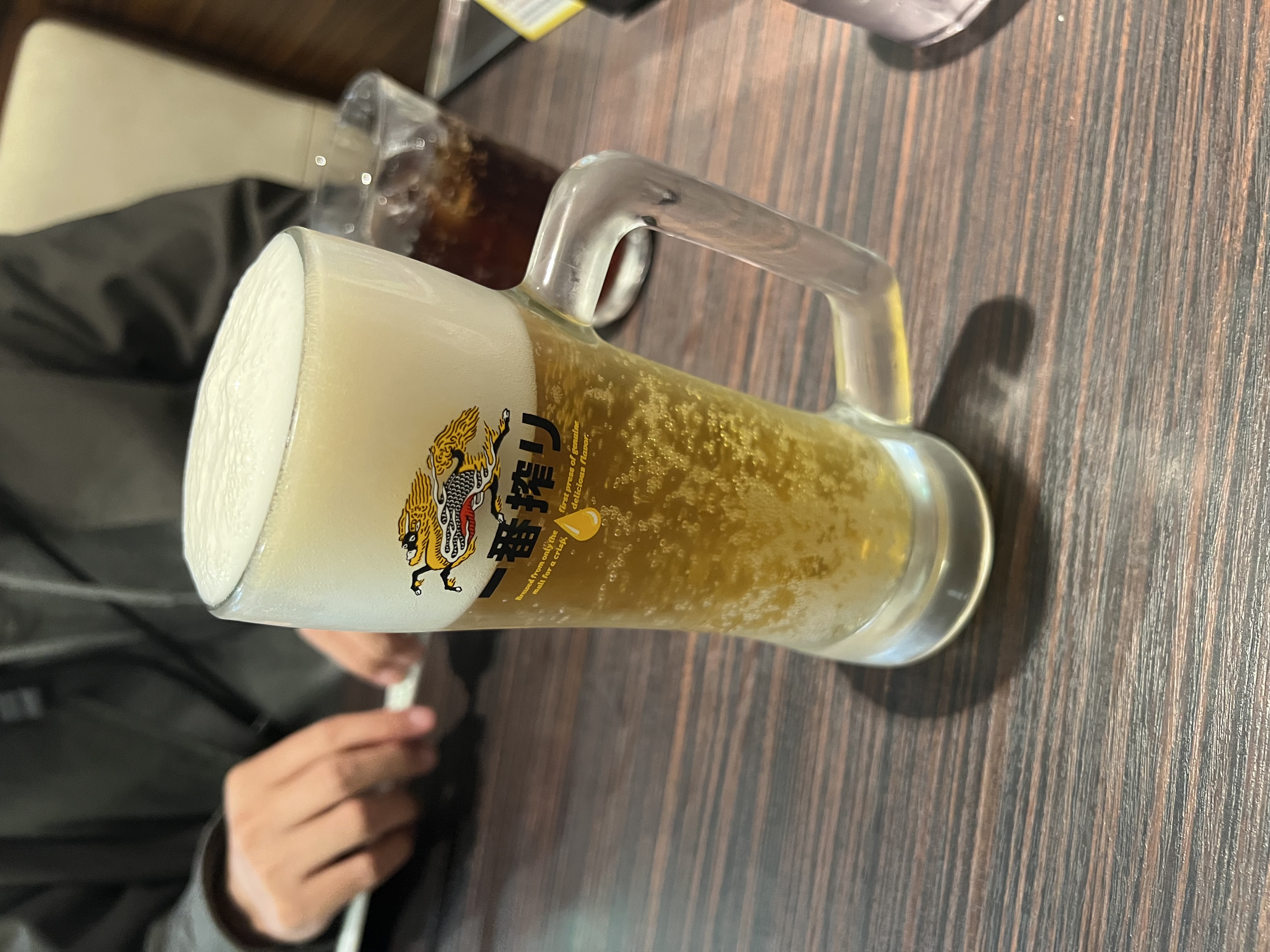
We sat down, ordered Kirin, took stock of the menu for longer than seemed necessary, and both ended up with more toppings than was strictly sensible.
The Food
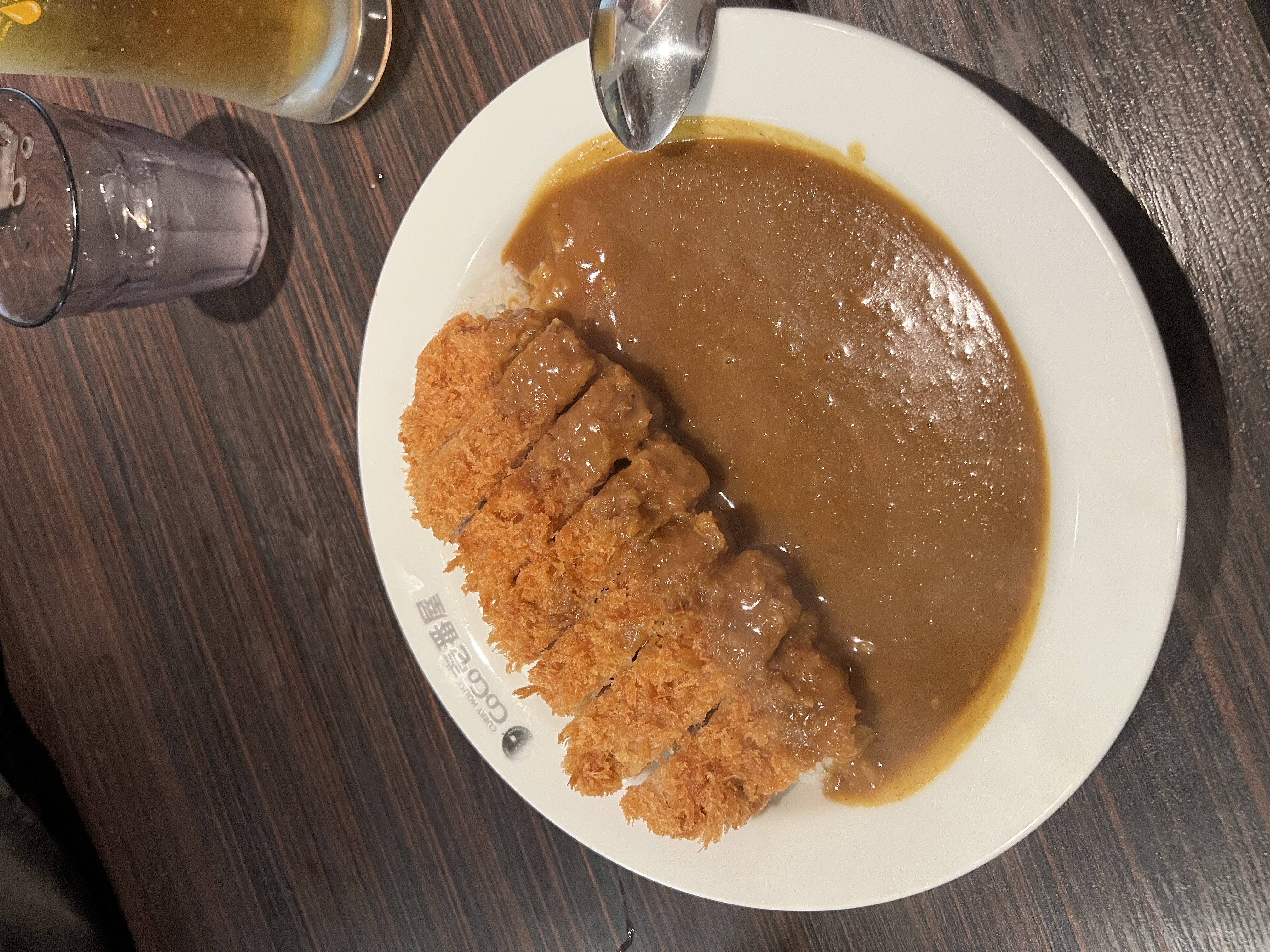
I went katsu curry — the obvious choice, and the right one. The cutlet was properly crispy, not the slightly soggy version you sometimes get when sauce has been sitting on it too long. The curry itself is thick and dark and deeply savoury, not particularly spicy at level 3 but with a warmth that builds across the bowl. The rice comes moulded into a dome shape that slowly gives way as you eat. It's deeply satisfying in a way that's hard to articulate beyond just: this is exactly what you want it to be.
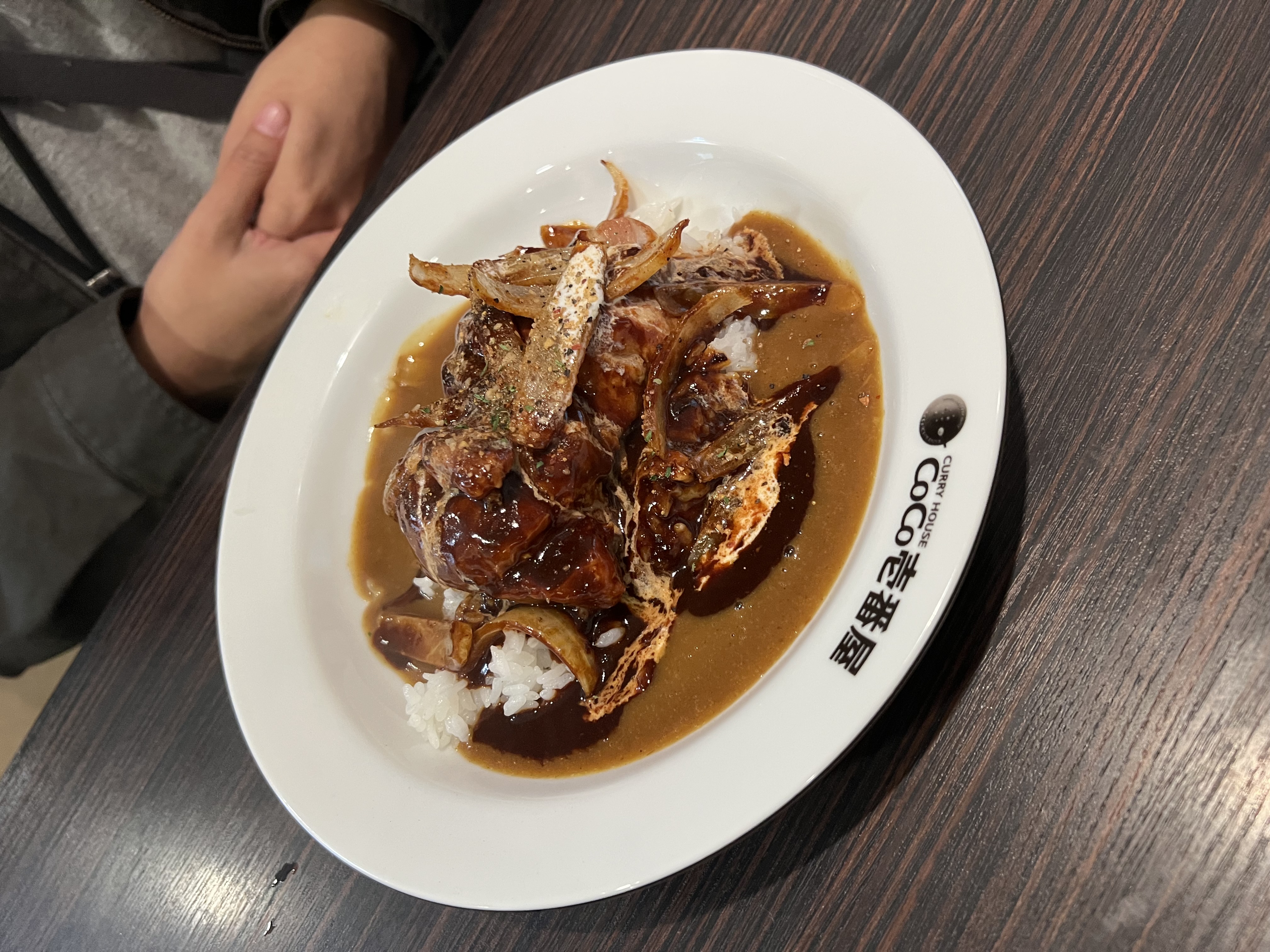
Mikey's bowl had the ebi fry plus caramelised onions and looked considerably more dramatic. The ebi are huge — thick, battered, the kind of prawn that makes you wonder why you didn't just order two. The onions had taken on some of the curry sauce and were somewhere between a topping and a component at that point. He finished it. He would.
Why Nagoya
You can eat at CoCo Ichibanya anywhere. There are branches in London. There are branches in Hawaii. There are probably branches in places that would genuinely surprise you. But something about eating it in Nagoya, the city where the whole thing started, made it feel less like fast food and more like context.
We'd spent the day at Nagoya Castle, walked through Sakae, done the things you do. By the time we ended up outside that yellow sign at night it had started to get cold and the city was quieter and the lit-up frontage of the restaurant looked warm and obvious. Sometimes that's enough of a reason.
It cost us nothing — by Japan standards, by anywhere standards. Two curries, two large Kirins, full to the point of needing to sit outside for a few minutes before we could comfortably walk. Peak Nagoya evening.
Worth going even if you've had it before. Order the katsu. Go level 4 if you want to feel something. Don't sleep on the ebi.